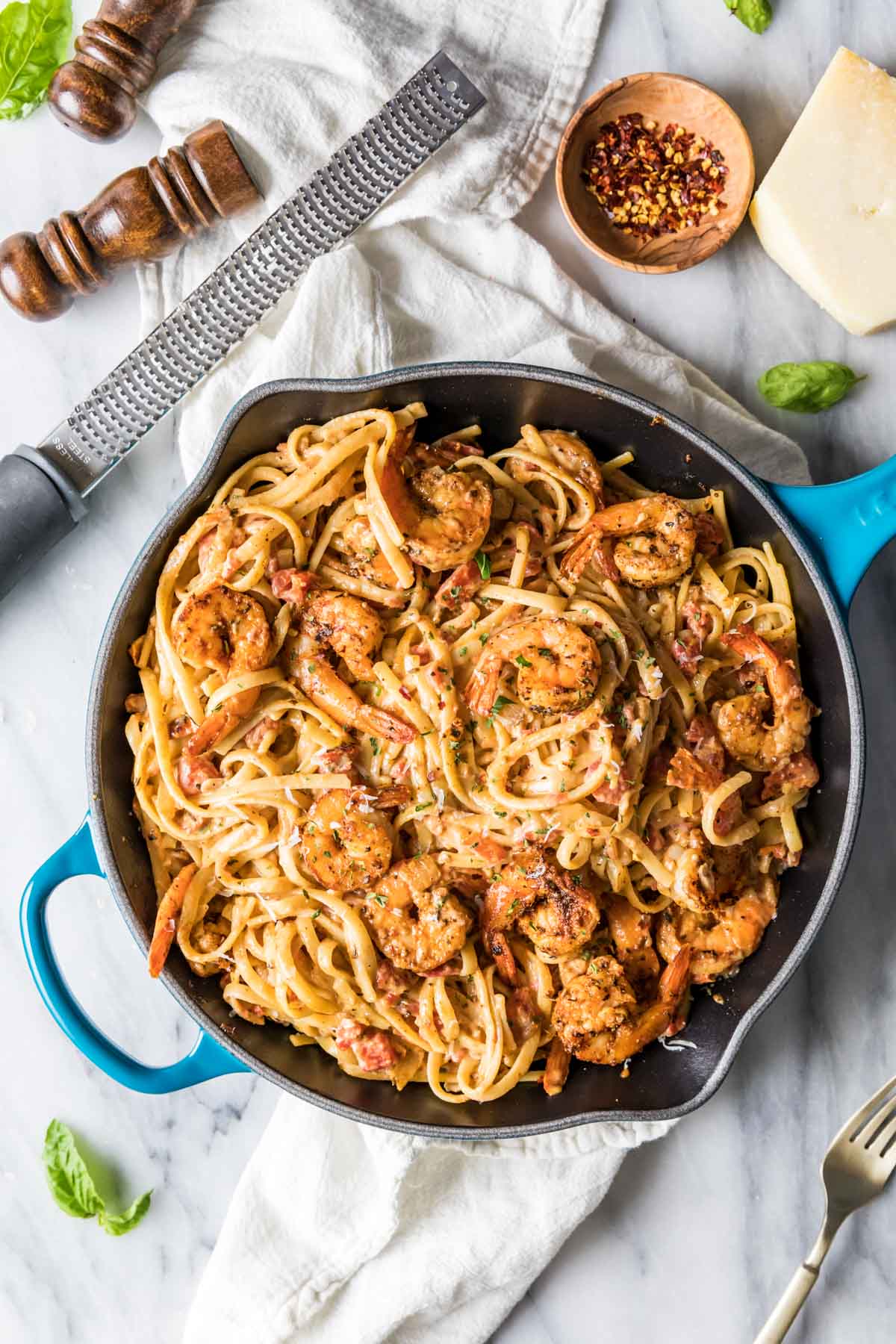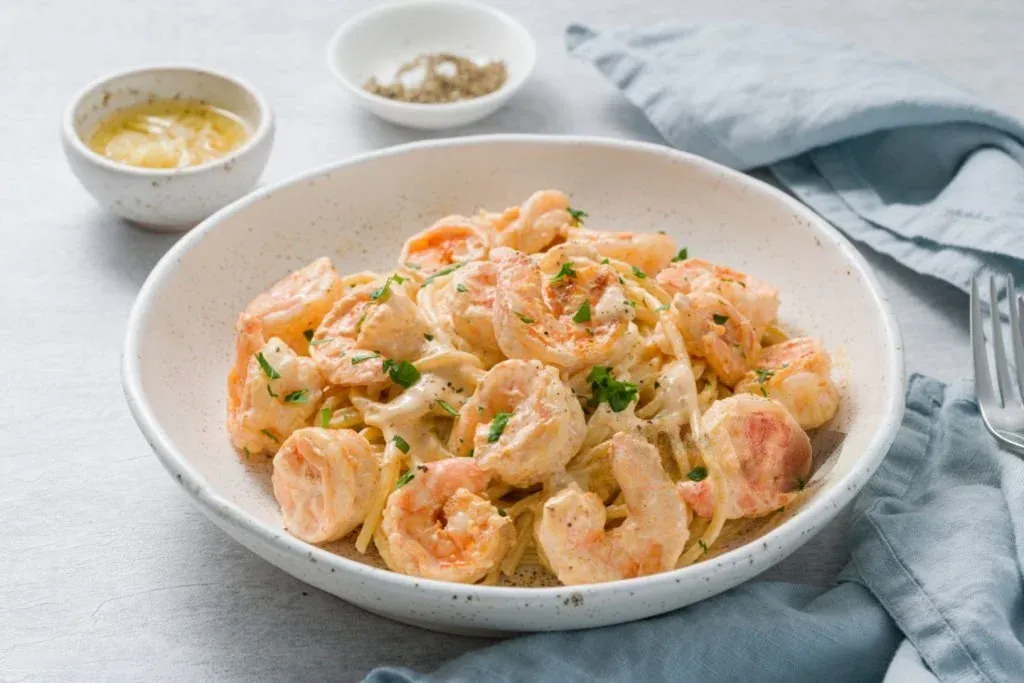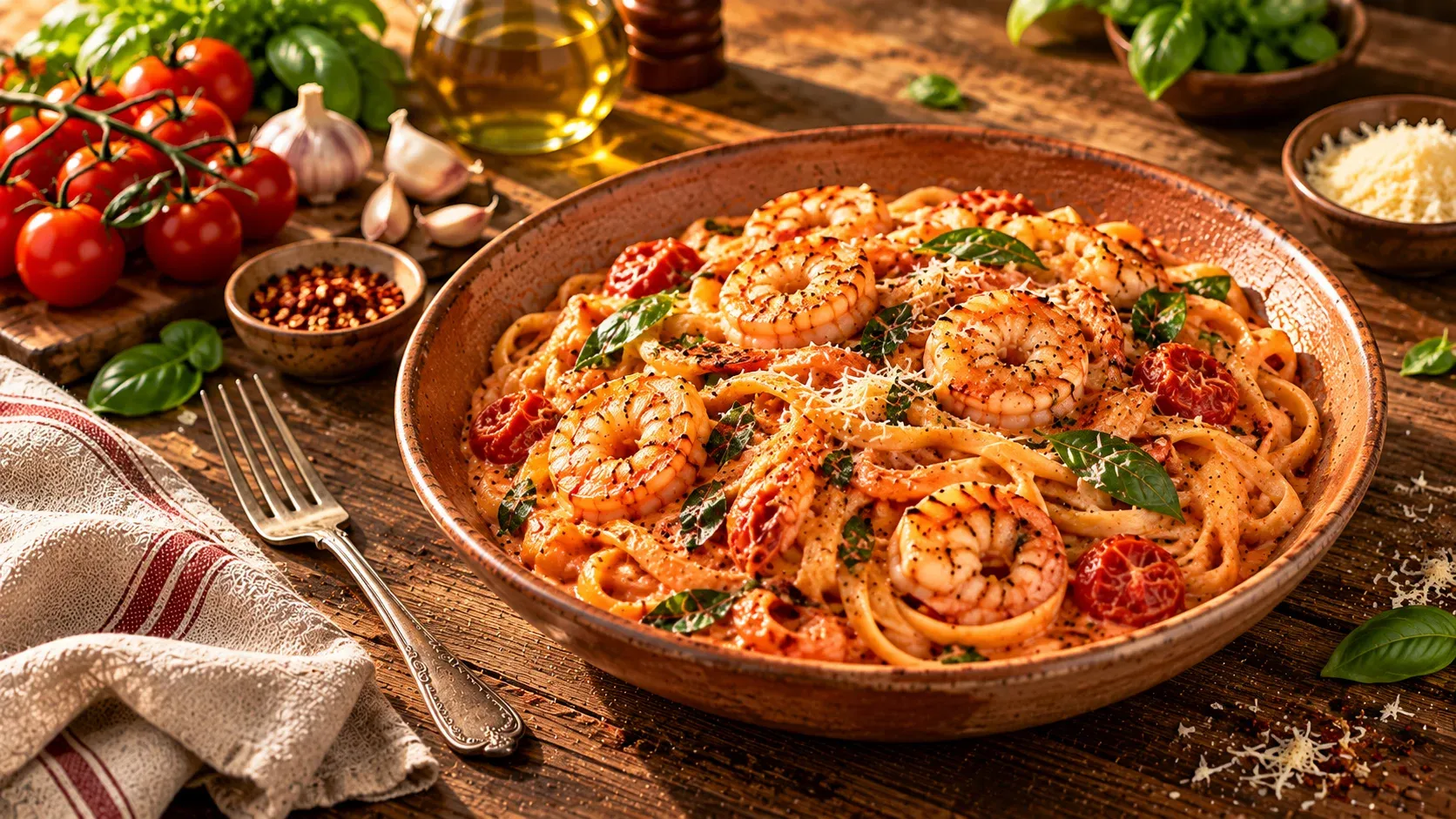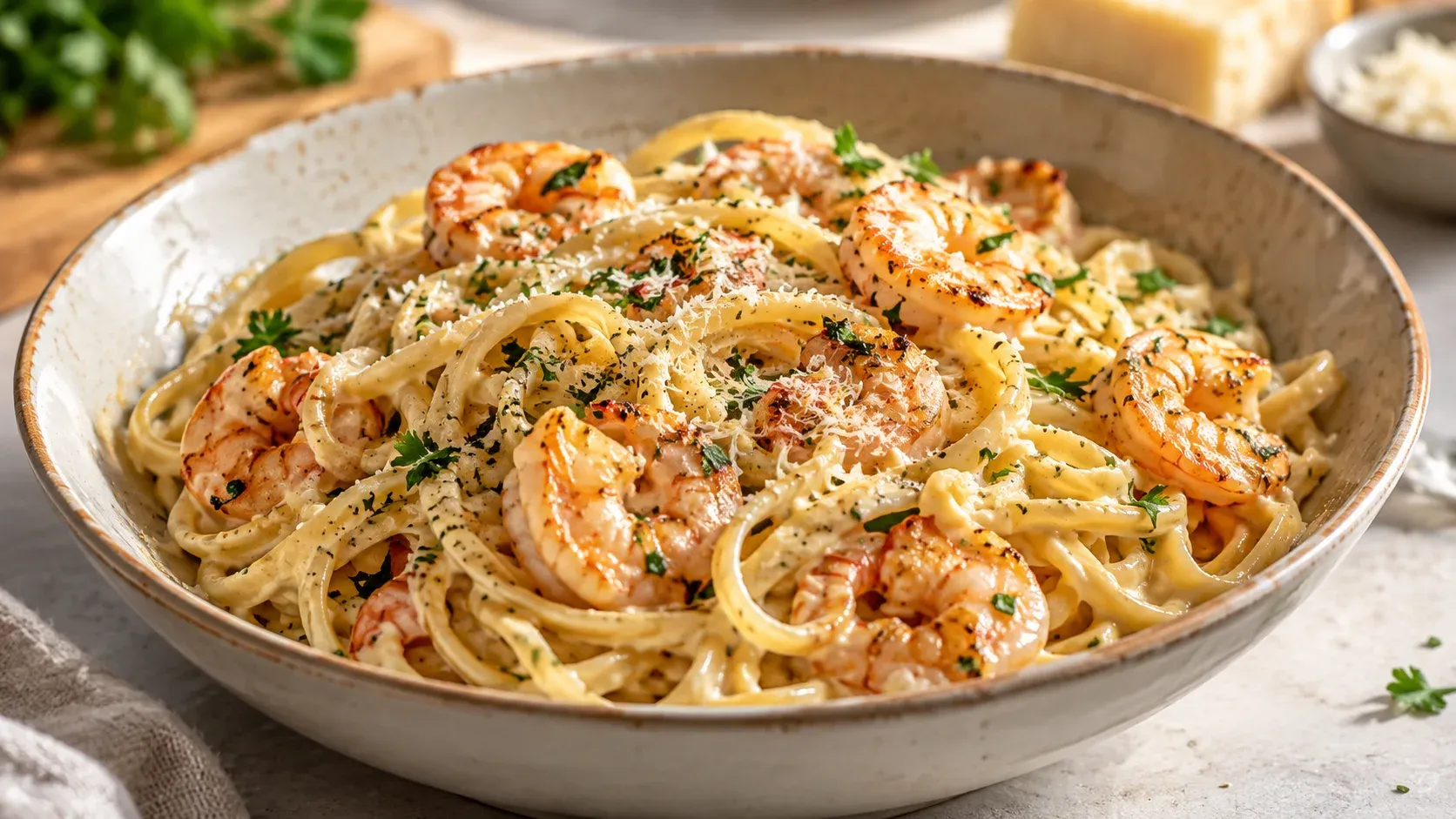
A silky creamy garlic prawn pasta ready in 15 minutes. Learn the emulsion trick that keeps the sauce from splitting, plus healthy swaps and FAQs.
The Secret to Creamy Garlic Prawn Pasta (No Splitting, No Watery Sauce)
There's a reason creamy garlic prawn pasta shows up on almost every food blog worth its salt. It delivers restaurant-level flavor in about fifteen minutes, using ingredients most people already have in the fridge. Juicy prawns, a silky garlic cream sauce, and pasta that actually holds onto that sauce instead of letting it pool at the bottom of the bowl.
I've made this dish more times than I can count, and I've ruined it just as many times when I was starting out. Sauce that split into a greasy mess. Prawns cooked to rubber. Pasta swimming in a thin, watery sauce that tasted like nothing. What changed things for me wasn't a fancier ingredient list. It was understanding what's actually happening in the pan.
That's what this guide covers. Not just the recipe, but the reasoning behind each step, so you can fix it yourself when something goes wrong instead of just following instructions blind.
Why This Recipe Works
Most people assume cream is doing all the work here. It isn't, not on its own. The real magic is the emulsion: cream, starchy pasta water, and a bit of fat coming together into a sauce that clings to the noodles rather than sitting in a puddle. Skip that step and you'll get a technically edible dish that still falls flat.
Once you understand that one idea, the rest of the recipe stops feeling like a list of steps and starts feeling like a method you can adapt.
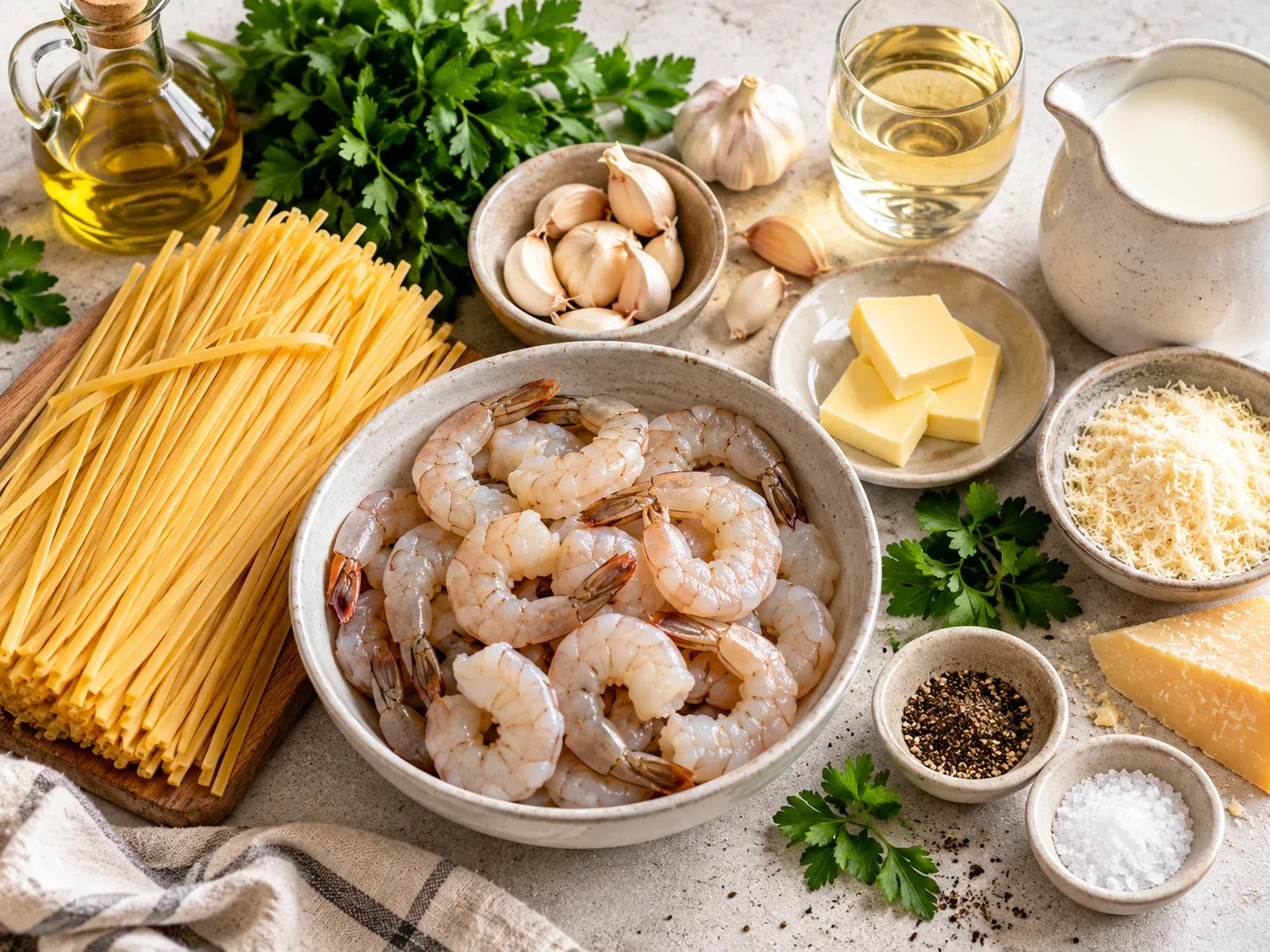
Ingredients You'll Need
You need surprisingly little for this dish to taste like something you'd order in a restaurant.
- Pasta – fettuccine, linguine, or spaghetti all work well
- Raw prawns, peeled (fresh or frozen)
- Garlic – fresh, not jarred, if you can manage it
- Butter and a splash of olive oil
- Dry white wine (optional, but it adds real depth)
- Cream
- Parmesan, freshly grated
- Parsley, black pepper, salt
Choosing Your Prawns
Small to medium prawns work best in a pasta dish because they distribute more evenly through each bite. Jumbo or king prawns look impressive but can be awkward to eat with pasta and are easy to overcook. Frozen prawns are completely fine here. In fact, most home cooks use frozen prawns for this exact recipe because the quality difference is minor once everything is coated in sauce. Just thaw them properly and pat them dry. Wet prawns release water into the hot pan and end up steaming instead of searing, which robs you of flavor and texture.
What Type of Cream to Use
This is one of the most common questions people ask about this dish, and the honest answer depends on what result you want.
| Cream Type | Result | Best For |
|---|---|---|
| Heavy or thickened cream (36%+ fat) | Thickest, richest sauce, least likely to split | The classic, indulgent version |
| Light cream or half-and-half | Lighter but still creamy | A lighter weeknight version |
| Whole milk | Very light, needs help thickening | Budget or lower-fat option |
| Mascarpone | Rich, thick, almost custard-like | A dinner-party upgrade |
| Crème fraîche | Tangy, holds up well to heat | If you want a subtle tang against the garlic |
If this is your first time making the dish, use heavy cream. It's the most forgiving option and the least likely to break on you, which brings us to the part almost nobody explains properly.
Best Pasta Shapes for This Sauce
Long, thin strands work best because they let the sauce coat every inch. Fettuccine and linguine are the most common choices for good reason. Short pasta like penne can work too, but you'll notice the sauce doesn't cling in quite the same way.
How to Make Creamy Garlic Prawn Sauce
The sauce is built in stages, and the order matters more than people realize.
You start by searing the prawns first, then removing them from the pan. This keeps them from overcooking while the sauce comes together. In the same pan, you sauté the garlic in butter just until it turns fragrant, not browned. Burnt garlic turns bitter fast and there's no saving a sauce once that happens.
If you're using wine, this is where it goes in. Let it simmer down for a minute or two so the alcohol cooks off and the flavor mellows. Then the cream goes in, along with the parmesan, and everything gets a gentle simmer until it thickens slightly.
The Emulsion Technique
Here's the step that separates a good version of this dish from a forgettable one. Before you drain your pasta, scoop out a cup of the starchy cooking water and set it aside. When you combine the pasta, prawns, and sauce at the end, add a splash of that water and toss everything vigorously over medium heat for a minute or two. You'll watch the sauce visibly tighten and start clinging to the noodles instead of pooling around them. It looks like nothing is happening for the first thirty seconds. Keep tossing. It happens all at once.
How to Keep Creamy Pasta From Splitting or Going Watery
This is the single biggest reason homemade creamy pasta disappoints people, and almost no recipe actually explains why it happens.
Sauces split when fat and liquid separate under too much heat, too fast. You'll notice a greasy, grainy texture instead of a smooth one. Sauces go watery for the opposite reason: not enough emulsification, so the sauce never properly binds to the pasta and just slides off.
Three things fix both problems.
First, never let the sauce hit a hard boil once cream is in the pan. A gentle simmer is all you need. High heat is the number one cause of splitting.
Second, always save that pasta water before draining. It's the ingredient that actually binds cream and starch into a real sauce instead of a liquid the pasta just sits in.
Third, add cheese gradually and off high heat. Dumping cold, coarsely grated parmesan into a hard-boiling sauce is one of the fastest ways to end up with a grainy mess.
If your sauce does split, take it off the heat right away and whisk in a splash of cold pasta water or cream. It won't always fully recover, but it usually gets close enough to save dinner.
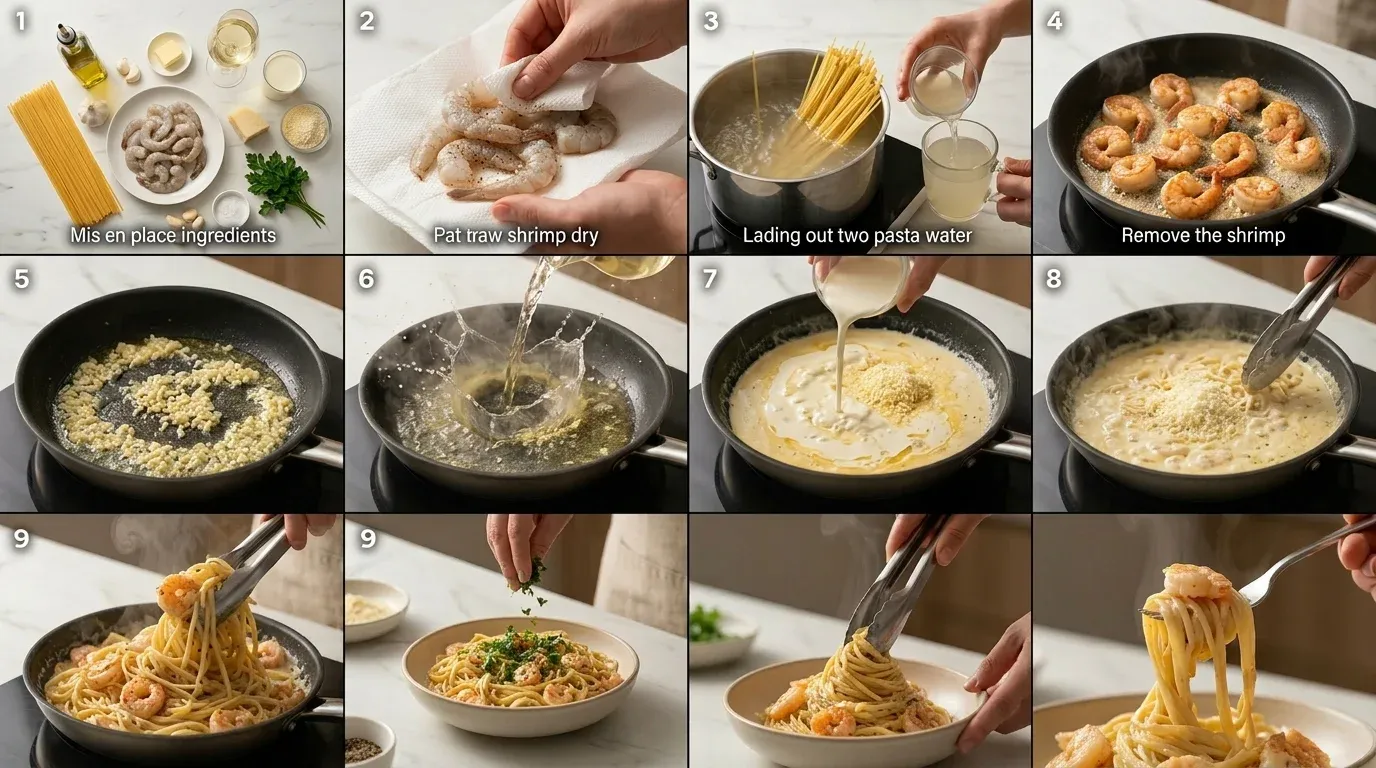
Step-by-Step Instructions
- Cook your pasta in salted boiling water until just under al dente. Reserve a cup of the cooking water before draining.
- Pat your prawns completely dry, season with salt and pepper.
- Sear the prawns in butter over medium-high heat for about a minute per side, until just cooked through. Remove from the pan.
- In the same pan, melt more butter and sauté the garlic for about twenty seconds until fragrant.
- Add wine if using, and let it reduce for a couple of minutes.
- Stir in the cream and parmesan, and let it simmer gently until slightly thickened.
- Add the pasta, prawns, and a splash of reserved pasta water. Toss vigorously for a minute or two until the sauce clings to the pasta.
- Finish with parsley, black pepper, and extra parmesan if you like.
Seasoning and Flavor Variations
What Spices Go Well With Prawns
Prawns take on flavor quickly, which makes them forgiving to season. Garlic and black pepper are the backbone of this dish, but chilli flakes, smoked paprika, and lemon zest all pair naturally without overpowering the sauce. A small pinch of nutmeg is a classic addition to cream sauces generally and works quietly in the background here too.
Make It Spicy
If you want more heat, add chilli flakes or finely chopped fresh chilli when you sauté the garlic. Start with less than you think you need. The heat builds as the dish sits.
Make It Without Cream
If you'd rather skip the cream altogether, you can build a lighter version using olive oil, extra garlic, a splash of pasta water, and a generous amount of parmesan to create body instead of relying on dairy. It won't taste identical, but it's a genuinely good dish in its own right rather than a compromise.
Is Garlic Prawn Pasta Healthy?
Prawns themselves are lean, high in protein, and low in calories on their own. The dish as a whole depends entirely on how much cream, butter, and cheese you use. A standard serving with heavy cream and butter sits in the range of a rich, indulgent dinner rather than a light one, so it's worth treating this as an occasional dish rather than a daily staple if that's a concern for you.
If you want to lighten it up, swapping heavy cream for half-and-half or reducing the butter slightly makes a real difference without ruining the dish. Loading up on fresh parsley and a squeeze of lemon at the end also helps balance the richness.
Recipe FAQs
What kind of prawns should I use?
Small to medium raw prawns work best for even distribution through the pasta.
Can I use frozen prawns?
Yes. Thaw them fully and pat them dry before cooking so they sear properly instead of steaming.
How do I know when prawns are cooked?
They turn opaque and curl into a loose C shape. If they curl into a tight O shape, they're overcooked.
Can this be made dairy-free?
Yes, using a lighter, oil-based version instead of cream, as described above.
Can I reheat creamy prawn pasta?
It's best eaten fresh since seafood doesn't reheat well. If you must reheat it, do so gently on the stove with a splash of water or cream to loosen the sauce, and avoid the microwave, which tends to make prawns rubbery.
How do I store leftovers?
Keep in an airtight container in the fridge for up to a day. Reheat gently rather than storing long-term.
Final Thoughts
Once you understand why each step matters, this recipe stops being something you follow and starts being something you actually know how to make. The technique here works just as well if you swap in chilli, skip the cream, or use a different pasta shape entirely. Master the emulsion once, and every variation after that gets easier.
Recipe
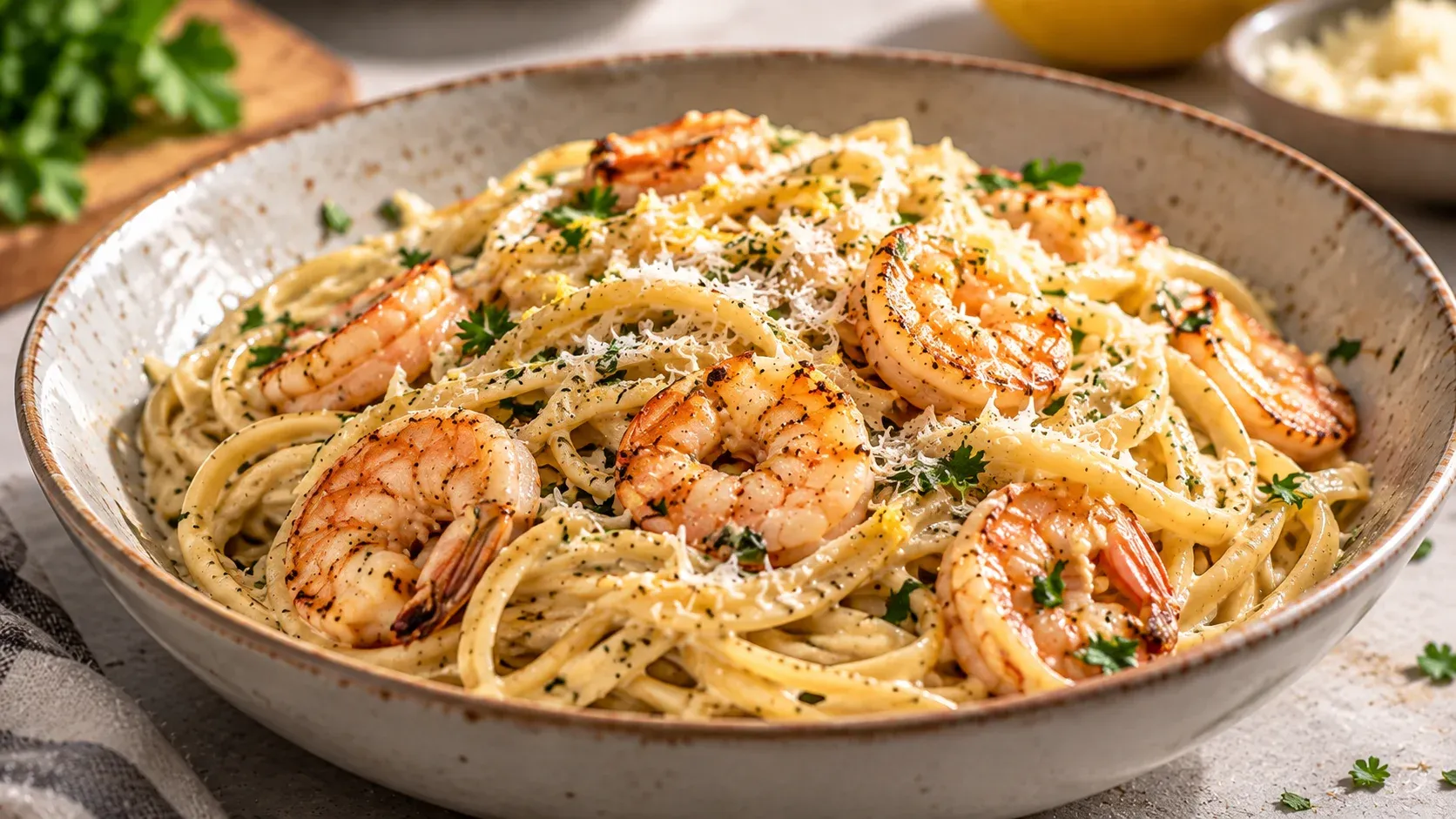
Creamy Garlic Prawn Pasta Recipe (15 Minutes, No-Fail)
By Rabi
A silky creamy garlic prawn pasta ready in 15 minutes, with the emulsion technique that keeps the sauce from splitting.
- Prep
- 10 min
- Cook
- 15 min
- Rest / additional
- 0 min
- Total
- 25 min
- Servings
- 2
- Cuisine
- Italian
Ingredients
Instructions
- Cook the pasta in salted boiling water until just under al dente. Reserve a cup of the cooking water before draining. Pat the prawns completely dry and season with salt and pepper. Sear the prawns in butter over medium-high heat for about a minute per side, until just cooked through. Remove from the pan. In the same pan, melt more butter and sauté the garlic for about twenty seconds until fragrant. Stir in the cream and parmesan, and let it simmer gently until slightly thickened. Add the pasta, prawns, and a splash of reserved pasta water. Toss vigorously for a minute or two until the sauce clings to the pasta. Finish with parsley, black pepper, and extra parmesan if you like.
Notes
For a lighter version, swap heavy cream for half-and-half. Best eaten fresh, as seafood doesn't reheat well.
Nutrition per serving
- calories
- 620 kcal
- protein
- 34 g
- carbohydrates
- 58 g
- fat
- 28 g
Related Articles
More posts you might enjoy