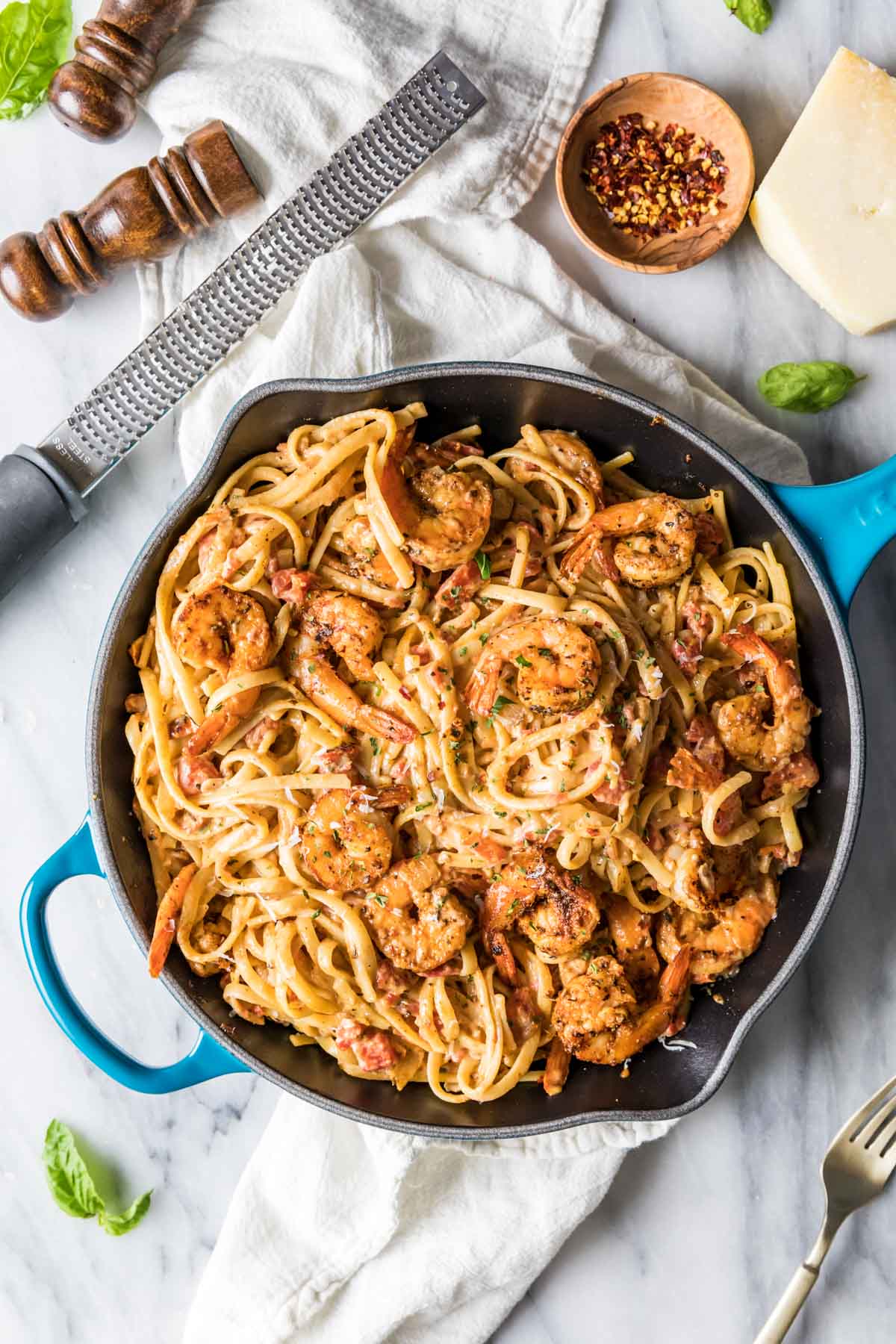
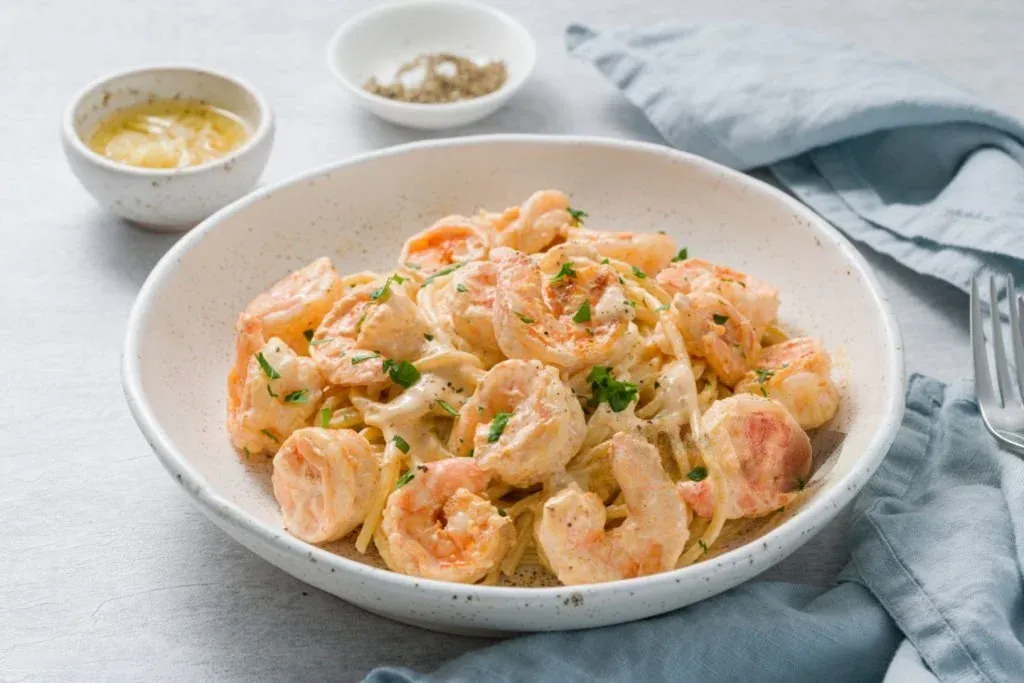
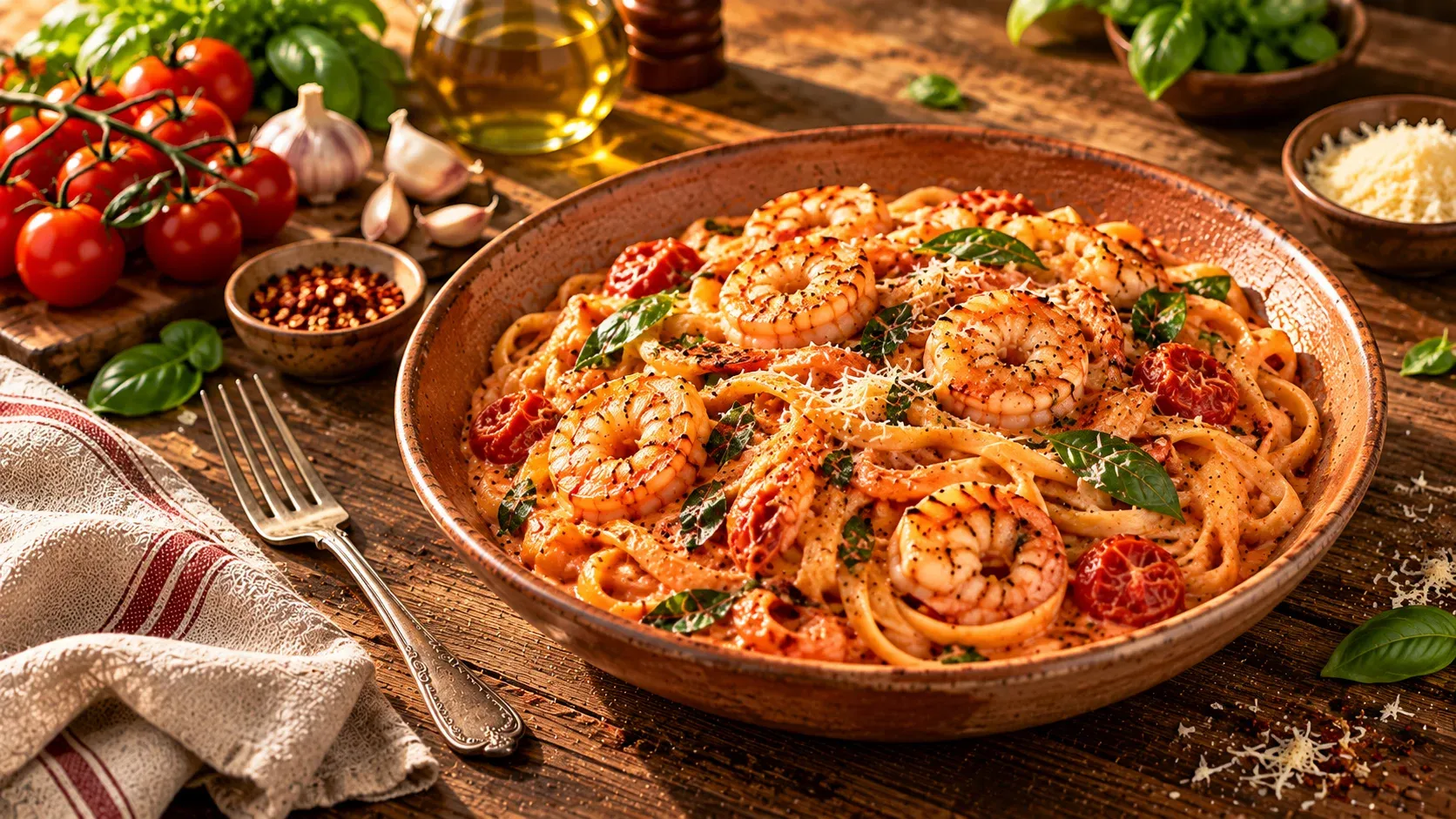
How to Cook Prawns Perfectly: Tips & Common Mistakes
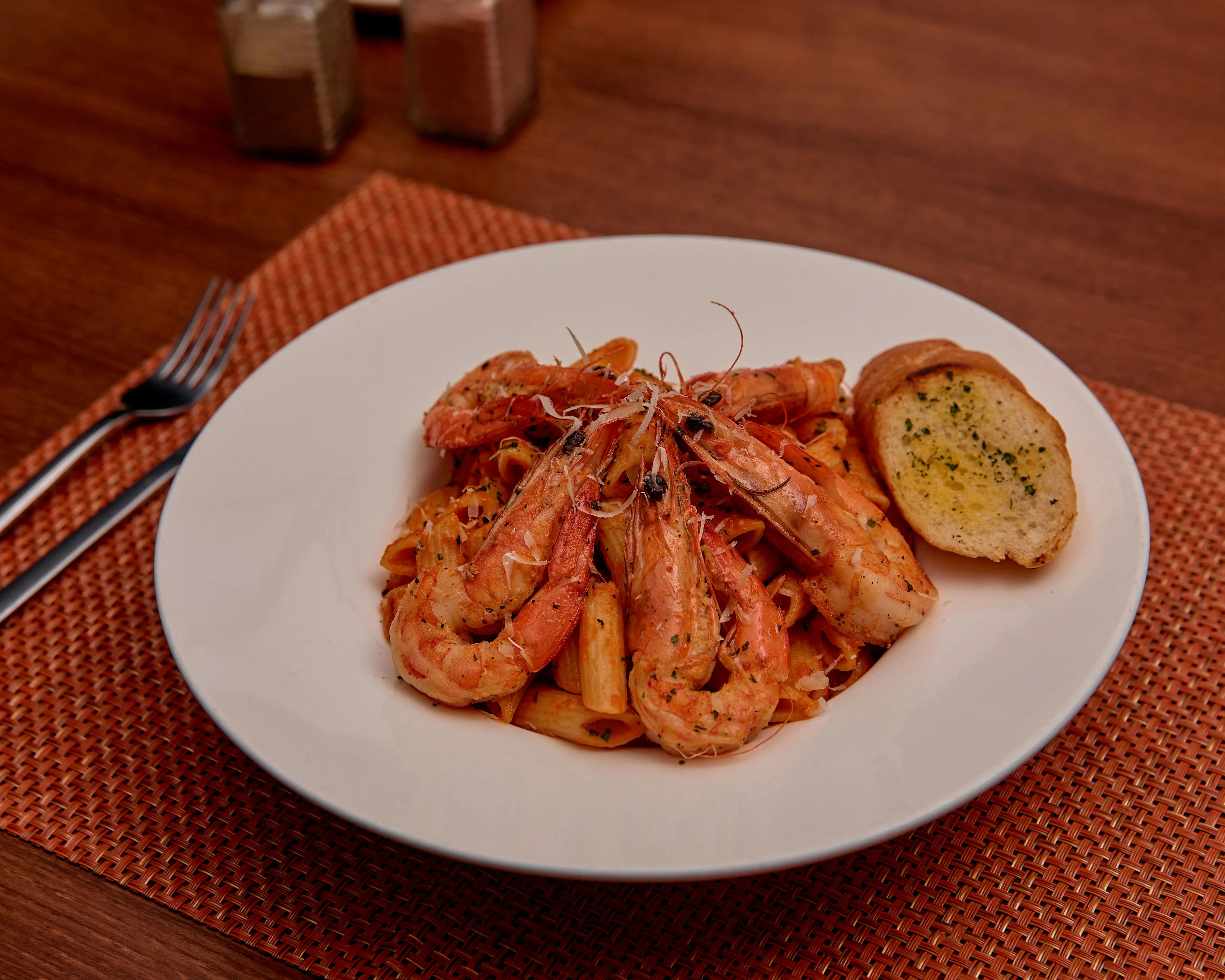
Learn how to cook prawns for pasta the right way. Covers peeling, seasoning, common mistakes, and how to tell when they're perfectly done.
How to Cook Prawns for Pasta (The Complete Guide)
Prawns are one of the easiest proteins to ruin. Give them thirty extra seconds in the pan and they turn from tender to rubbery. Most recipes rush past this part, as if everyone already knows how to do it right. This guide slows down and covers exactly what to do, from picking the right prawns to knowing the second they're done.
Why Prawns Deserve Their Own Guide
Chicken forgives you. Beef forgives you. Prawns do not. They go from raw to perfect to overcooked in about a minute, and there's no fixing it once they've gone tough. Once you understand a few basic rules, though, cooking prawns well becomes almost automatic. That's the goal here.
Choosing the Right Prawns
Fresh vs. Frozen Prawns
Frozen prawns are usually the better choice, even though "fresh" sounds better on paper. Most prawns sold as "fresh" at the counter were frozen at sea right after being caught, then thawed before being put on display. Buying them still frozen and thawing them yourself at home often means better quality, since you control exactly how they're thawed and how long they sit before cooking.
To thaw prawns quickly and safely, put them in a bowl of cold water for about fifteen to twenty minutes. Avoid hot water or the microwave, since both start cooking the outside before the inside has even thawed.
What Size Prawns Should You Use?
Prawns are usually sold by size: small, medium, large, jumbo, and king. For pasta, small to medium prawns work best. They cook fast, fit nicely on a fork alongside noodles, and spread more evenly through the dish. Jumbo and king prawns look impressive but can feel awkward to eat with pasta, and their larger size makes it easier to accidentally undercook the center while the outside looks done.
Raw vs. Pre-Cooked — Always Choose Raw
Pre-cooked prawns (often labeled "cooked and peeled") have already gone through their one safe window of heat. Cooking them again in a hot pan pushes them straight into overcooked territory, since there's no raw texture left to protect. Always buy raw prawns if you're cooking them in a recipe. They'll be labeled raw, or sometimes just "easy peel" without saying cooked.
How to Prep Prawns Before Cooking
Do I Peel Prawns Before Cooking?
Yes, for most pasta dishes. Shell-on prawns add flavor if you're making a stock or a sauce built around simmering the shells, but for a quick pasta dish, peeled prawns cook faster and are much easier to eat. If your prawns came shell-on, peel them before they go in the pan.
How to Peel and Devein Prawns
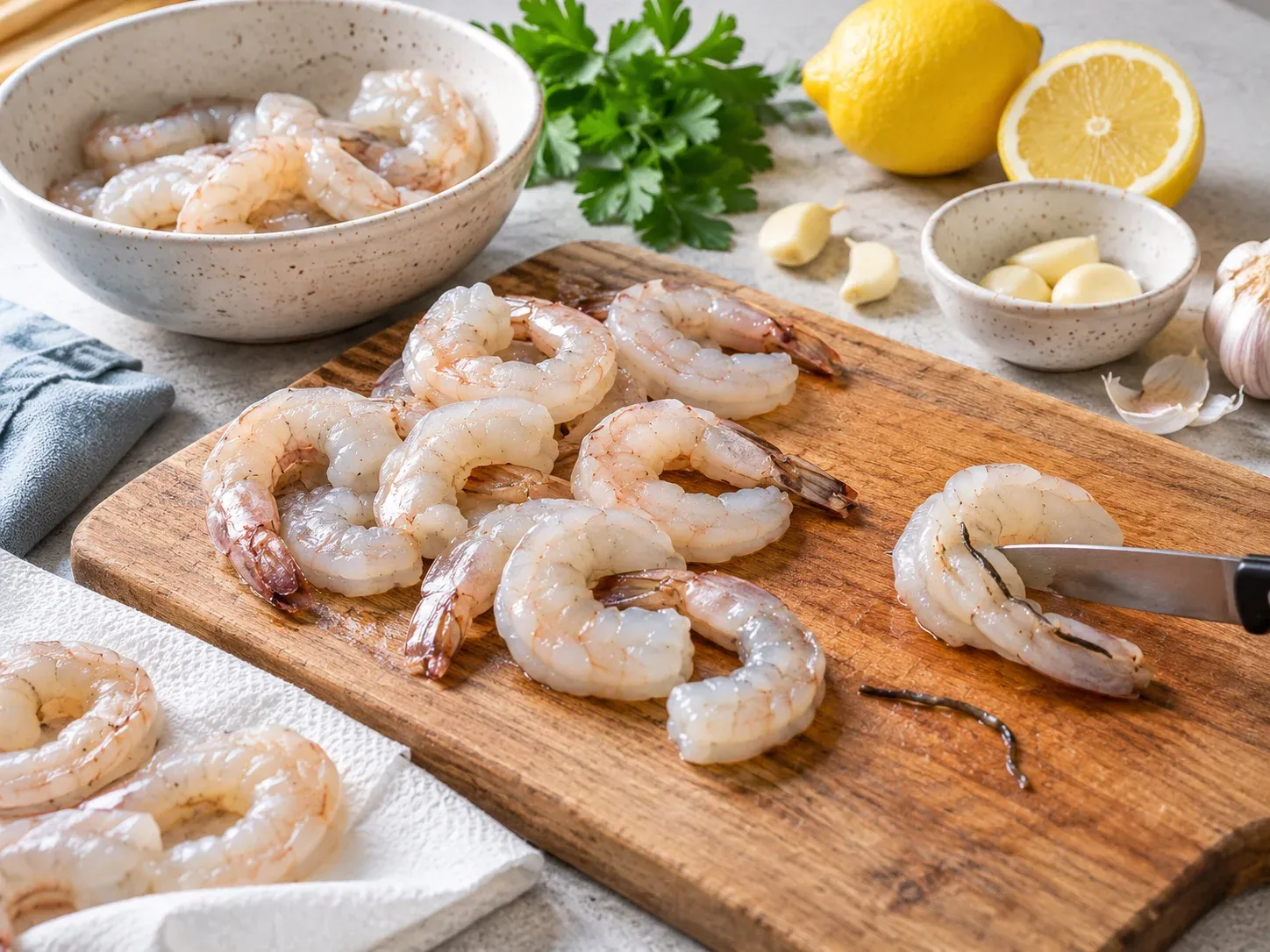
Start by pulling off the legs, then peel the shell away starting from the underside. The tail can be left on for presentation or removed entirely, depending on preference. Once peeled, run a small knife along the curved back of the prawn to expose the thin dark vein running through it, then lift it out with the tip of the knife or your fingers.
Are Prawn Veins Safe to Eat?
Technically, yes. The vein is the prawn's digestive tract, and eating it won't make you sick. Most people remove it anyway because it can carry a slightly gritty texture and a faint off-flavor, especially in larger prawns. For small prawns, some cooks skip this step entirely since the vein is barely noticeable. For anything medium-sized or larger, it's worth the extra thirty seconds to remove it.
Patting Prawns Dry (Why This Step Matters)
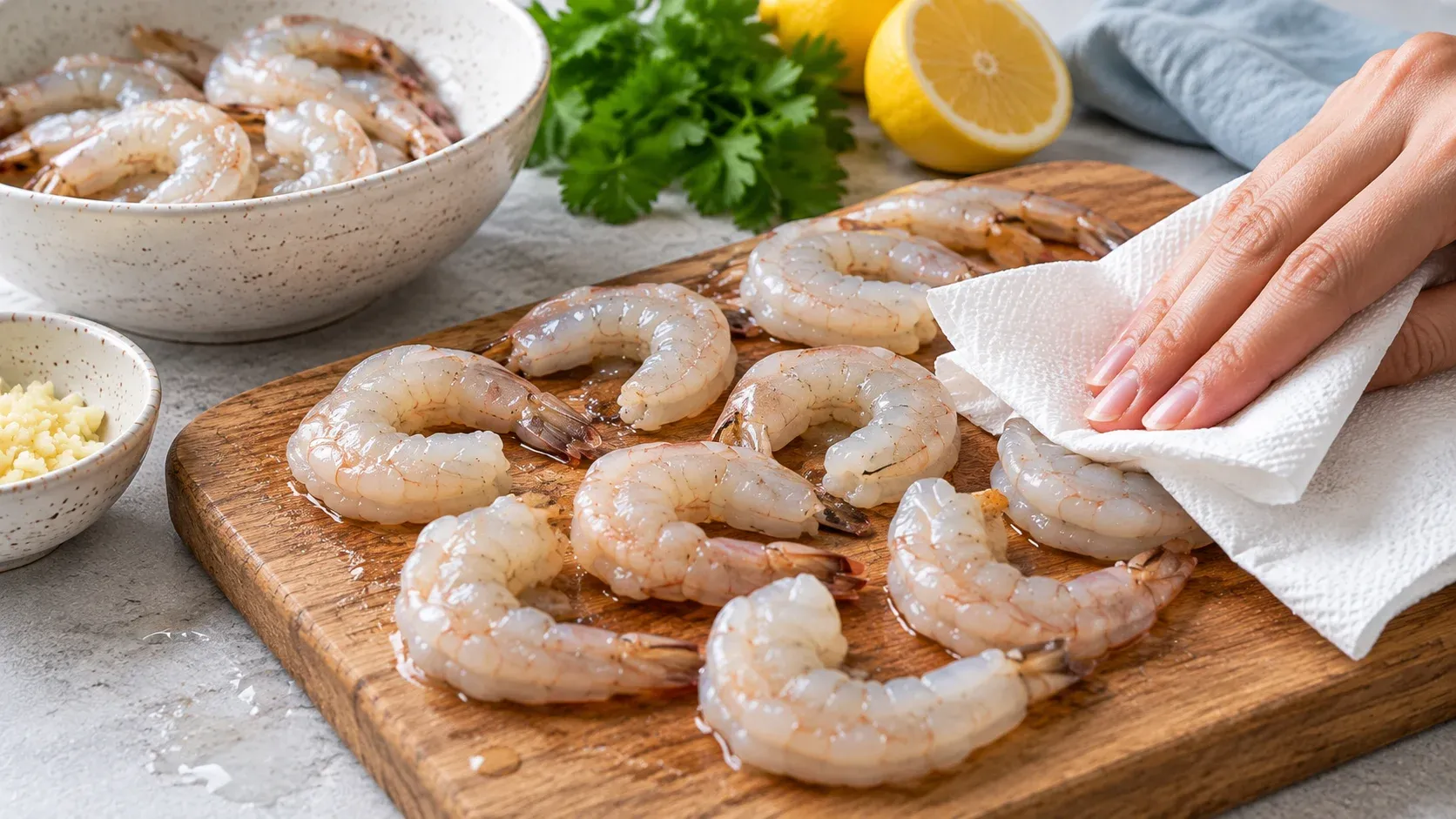
This step gets skipped constantly, and it's one of the biggest reasons prawns turn out disappointing. Wet prawns release water the second they hit a hot pan, which drops the pan's temperature and causes the prawns to steam instead of sear. Steamed prawns turn pale and mushy instead of getting that light golden color on the outside. Pat them dry with paper towels right before cooking, not five minutes ahead of time, since they'll release moisture again if left sitting.
The Best Way to Cook Prawns for Pasta
Is It Better to Boil or Sauté Shrimp?
For pasta, sautéing wins by a wide margin. Boiling works fine if you're making shrimp cocktail or need plain cooked prawns for a salad, but it doesn't build any flavor into the prawns themselves. Sautéing in butter or oil browns the outside slightly, which adds real flavor, and it lets the prawns pick up whatever garlic, herbs, or spices are already in the pan.
How to Sauté Shrimp for Pasta, Step by Step
- Heat a pan over medium-high heat with butter, oil, or a mix of both.
- Once the fat is hot and shimmering, add the prawns in a single layer, without crowding the pan.
- Let them cook undisturbed for about a minute, then flip.
- Cook for another minute on the other side, until just opaque all the way through.
- Remove them from the pan right away, even if the rest of your sauce isn't ready yet.
That last step matters more than people expect. Leaving prawns in a hot pan while you finish something else is one of the most common ways they end up overcooked.
How Long to Cook Prawns
How to Know If a Prawn Is Fully Cooked
Look at the shape, not the clock. A properly cooked prawn curls into a loose C shape and turns from gray or translucent to an opaque pink or white color. If it curls into a tight, cramped O shape, it's overcooked. This visual test is more reliable than timing alone, since prawn size and pan heat can vary a lot between kitchens.
How to Keep Prawns Tender While Cooking
Three things keep prawns tender: high heat, short cooking time, and getting them out of the pan the moment they're done. Cooking prawns on low heat for a long time is the opposite of what you want. It gives them more time to dry out and toughen, rather than cooking them quickly before that has a chance to happen. If you're adding prawns back into a sauce later, as most pasta recipes do, add them at the very end and just warm them through rather than cooking them a second time.
Common Mistakes When Cooking Prawns
- Overcrowding the pan. Too many prawns at once drops the pan's temperature and causes steaming instead of searing. Cook in batches if needed.
- Cooking straight from frozen. This leads to uneven cooking, since the outside cooks faster than the still-frozen center. Always thaw first.
- Overcooking "just to be safe." Prawns cook fast, and the instinct to leave them a little longer usually backfires. Trust the C-shape test instead of guessing.
- Skipping the dry step. As covered above, wet prawns steam instead of sear, and it's one of the easiest mistakes to fix.
- Adding them too early to a sauce. If a recipe has you searing prawns, then building a sauce, then adding the prawns back, follow that order. Prawns dropped into a sauce too early will overcook while everything else finishes.
How to Make Prawns Taste Better
What Spices Go Well With Prawns?
Prawns pick up flavor quickly, which makes them easy to season well. Garlic and black pepper form a solid base for almost any prawn dish. Chilli flakes or smoked paprika add warmth without overwhelming the prawn's natural flavor. A little lemon zest brightens things up, and a small pinch of nutmeg works quietly in the background of cream-based sauces.
What Is the Best Shrimp Marinade?
A simple marinade of olive oil, minced garlic, lemon juice, and a pinch of salt and pepper works well for most pasta dishes, since it adds flavor without overpowering the sauce you're about to cook the prawns into. Fifteen to twenty minutes is plenty of time. Marinating much longer than that, especially with lemon juice, can start to slightly "cook" the prawns through acidity alone, changing their texture before they even hit the pan.
What Sauce Goes Well With Prawns and Pasta?
Prawns pair well with almost any pasta sauce, but a few styles are especially common. Creamy garlic sauces let the prawns' natural sweetness come through against a rich background. Tomato-based sauces add acidity that balances the richness of the seafood. Simple garlic and olive oil sauces keep the focus entirely on the prawns themselves, which works well if you're using good quality, fresh-tasting prawns.
Recipe FAQs
What is the best recipe for seafood pasta?
It depends on what you're in the mood for. A creamy garlic version is a reliable starting point if you want something rich, while a tomato-based version is a good pick for something lighter.
Can I use frozen prawns in pasta?
Yes, and most home cooks do. Just thaw them fully and pat them dry before cooking so they sear properly instead of releasing water into the pan.
What size prawns work best in pasta dishes?
Small to medium prawns are the easiest to work with for pasta, since they cook quickly and mix evenly through each bite.
How many prawns per person should I cook?
A good rule of thumb is around six to eight medium prawns per person as a main course, though this can flex depending on what else is in the dish.
Final Thoughts
Cooking prawns well comes down to a few simple habits: buy them raw, dry them before cooking, use high heat, and pull them off the moment they curl into that loose C shape. Once these become second nature, prawns stop being the tricky part of a recipe and start being the easiest part.
Related Articles
More posts you might enjoy