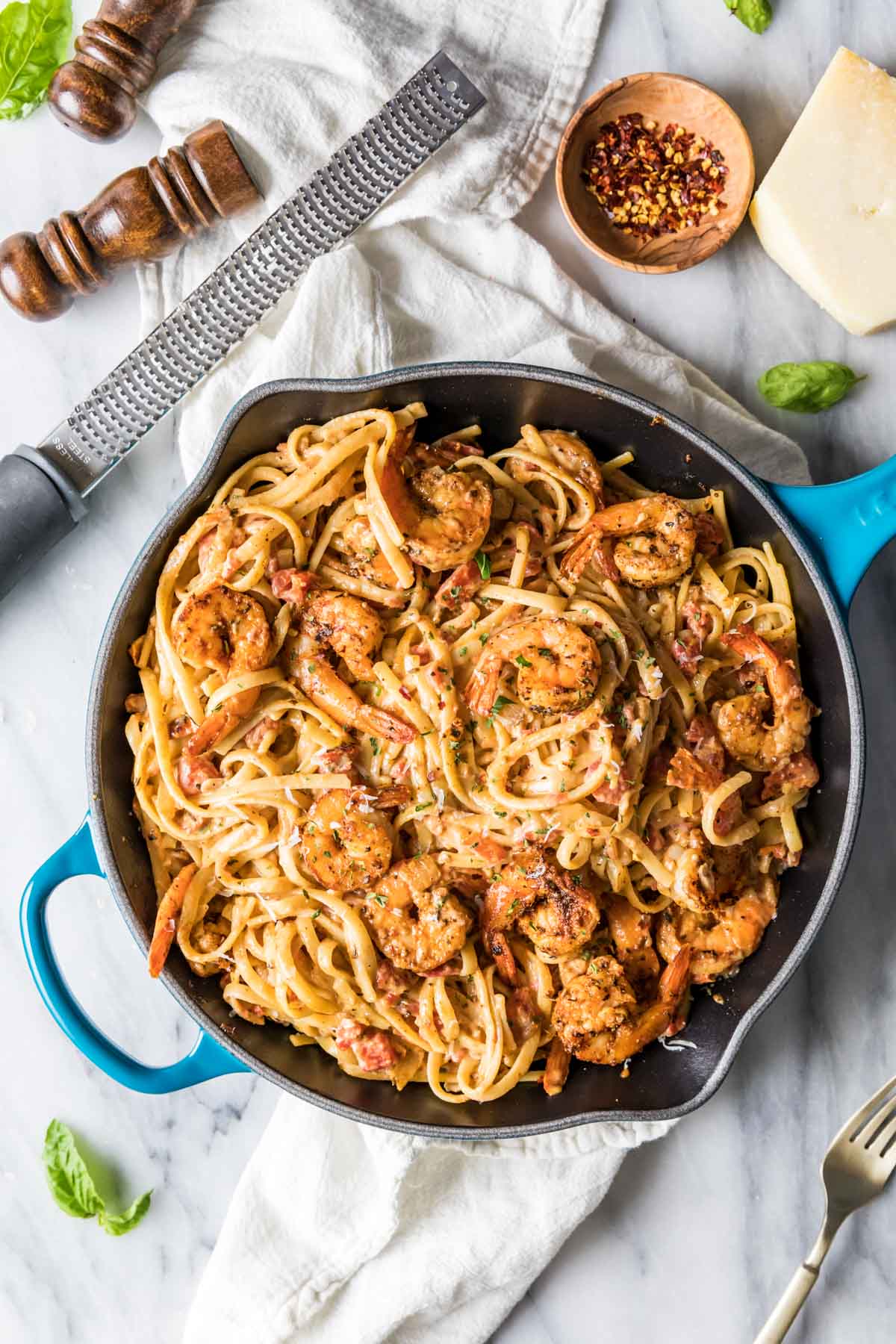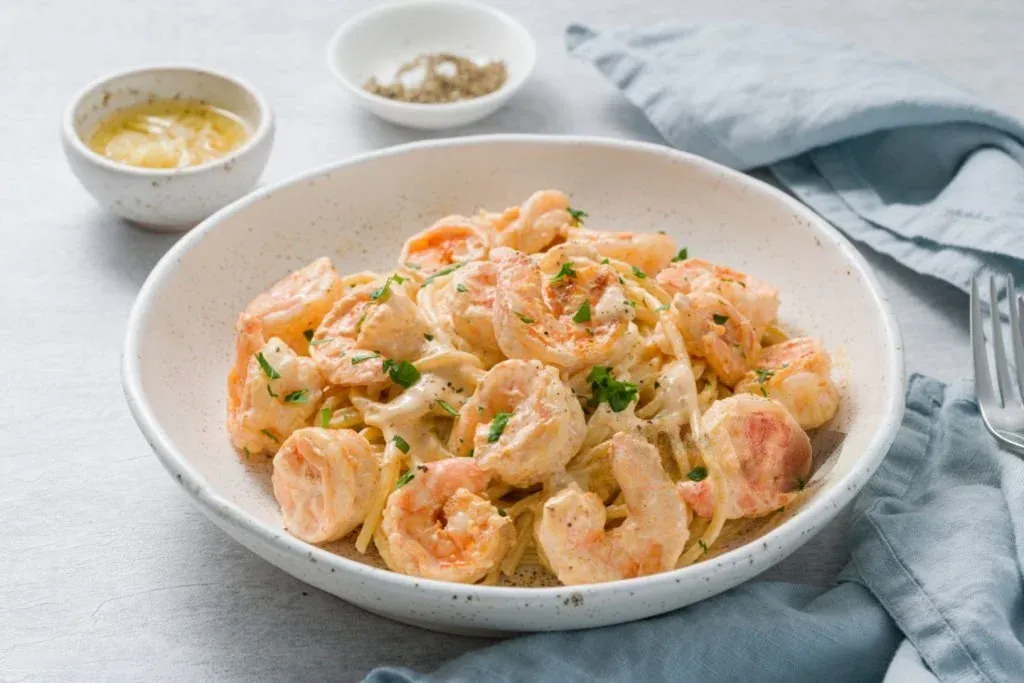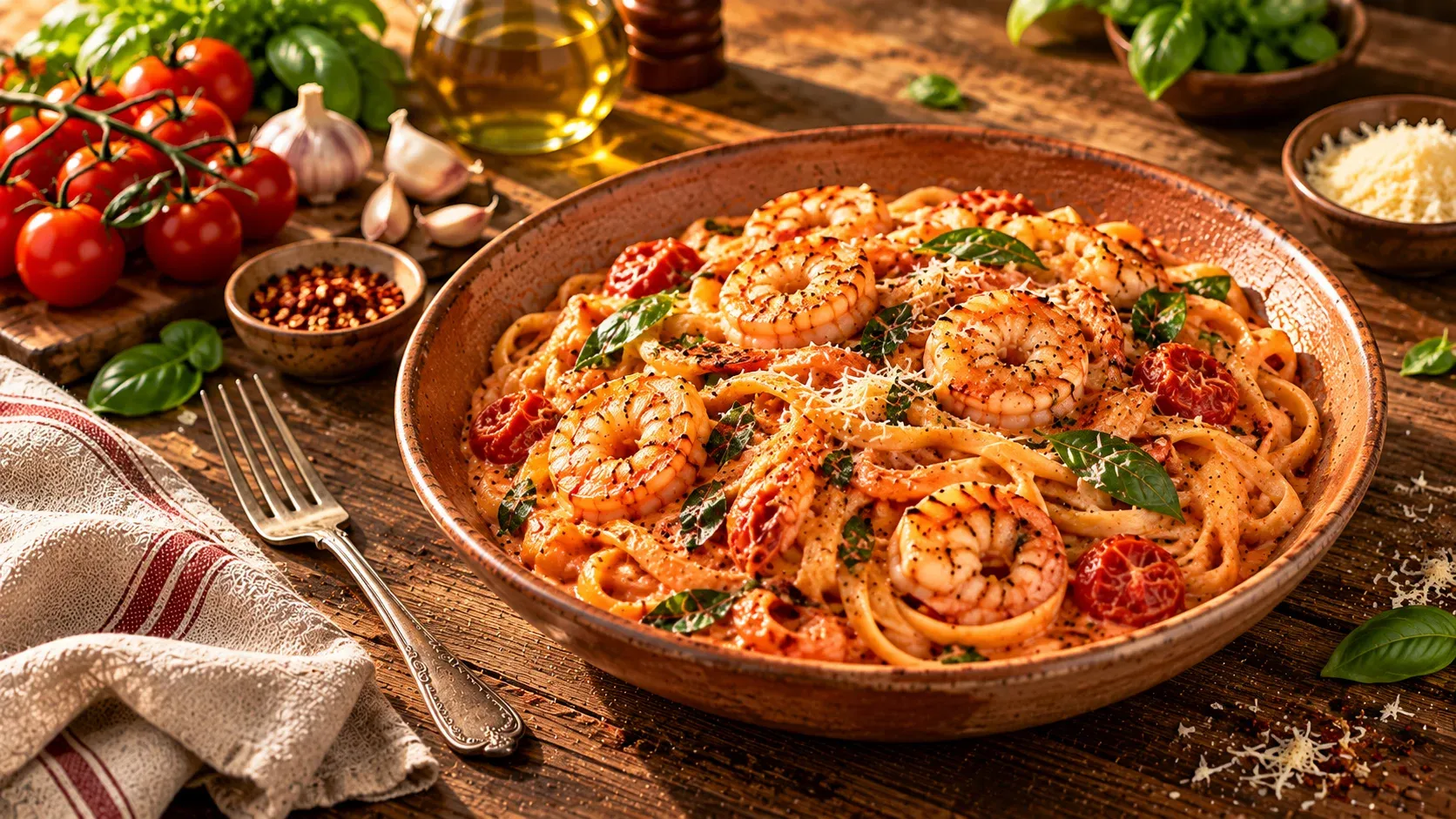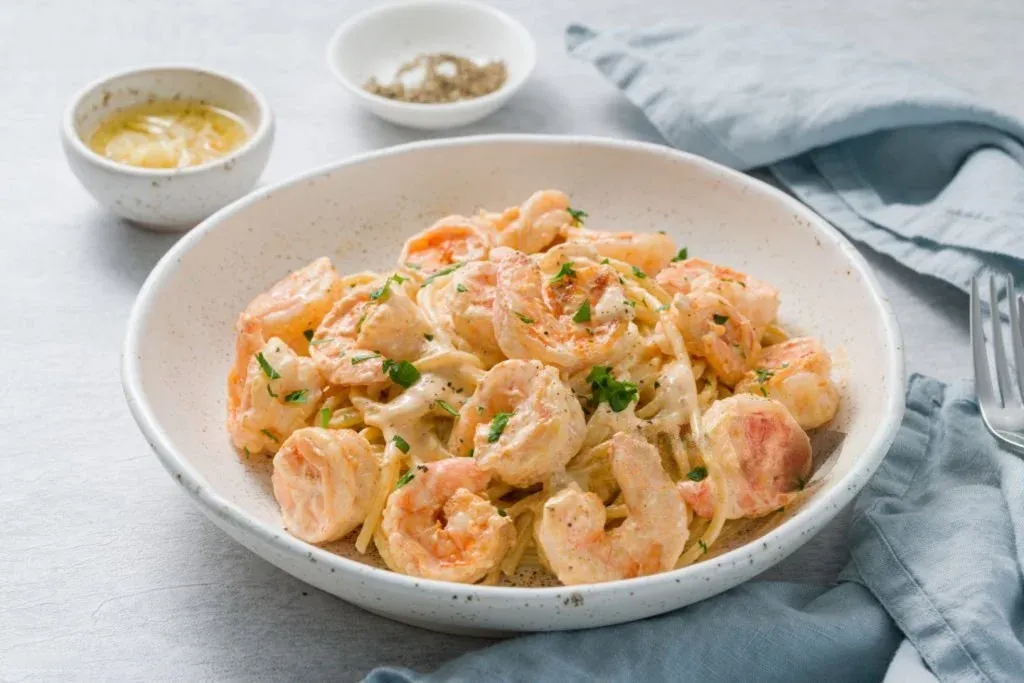
Creamy prawn linguine made two ways, with wine or without. Learn the technique, serving ideas, healthy swaps, and answers to common questions.
Creamy Prawn Linguine (With or Without Wine)
Creamy prawn linguine sits right alongside garlic prawn pasta as one of the most searched seafood pasta dishes, and it's easy to see why. Long strands of linguine, plump prawns, and a rich, glossy sauce that clings to every bite. It looks like something from a coastal Italian restaurant, but it comes together in one pan in under twenty minutes, using ingredients most people already keep in the kitchen.
One question comes up more than almost any other with this dish: do you actually need wine? Some cooks treat it as essential to the flavor. Others skip it entirely and never notice the difference. Both camps are right, depending on what you're going for, and this guide walks through both paths so you can decide for yourself rather than following a rule that doesn't actually matter as much as people think.
What Is Prawn Linguine?
Prawn linguine is a pasta dish made with linguine, a flat, long pasta similar to fettuccine but slightly thinner, tossed with prawns and a sauce built around garlic, butter, and cream. The prawns are usually seared separately, then combined with the pasta and sauce at the end so they stay tender rather than turning rubbery from sitting in a hot pan too long. It's a close cousin of garlic prawn pasta, but linguine's shape gives the dish a slightly different texture, since the sauce coats the flat strands more evenly than it would a round noodle like spaghetti.
The dish shows up across a lot of different food cultures with small variations. Some versions lean heavily on lemon and herbs. Others build in tomato for acidity. This version sticks close to the classic creamy style, since that's what most people picture when they search for it.
Ingredients You'll Need
- Linguine
- Raw prawns or king prawns, peeled and deveined
- Garlic, finely chopped
- Butter and a splash of olive oil
- Dry white wine (optional)
- Cream
- Parmesan, freshly grated
- Lemon, parsley, salt, and black pepper
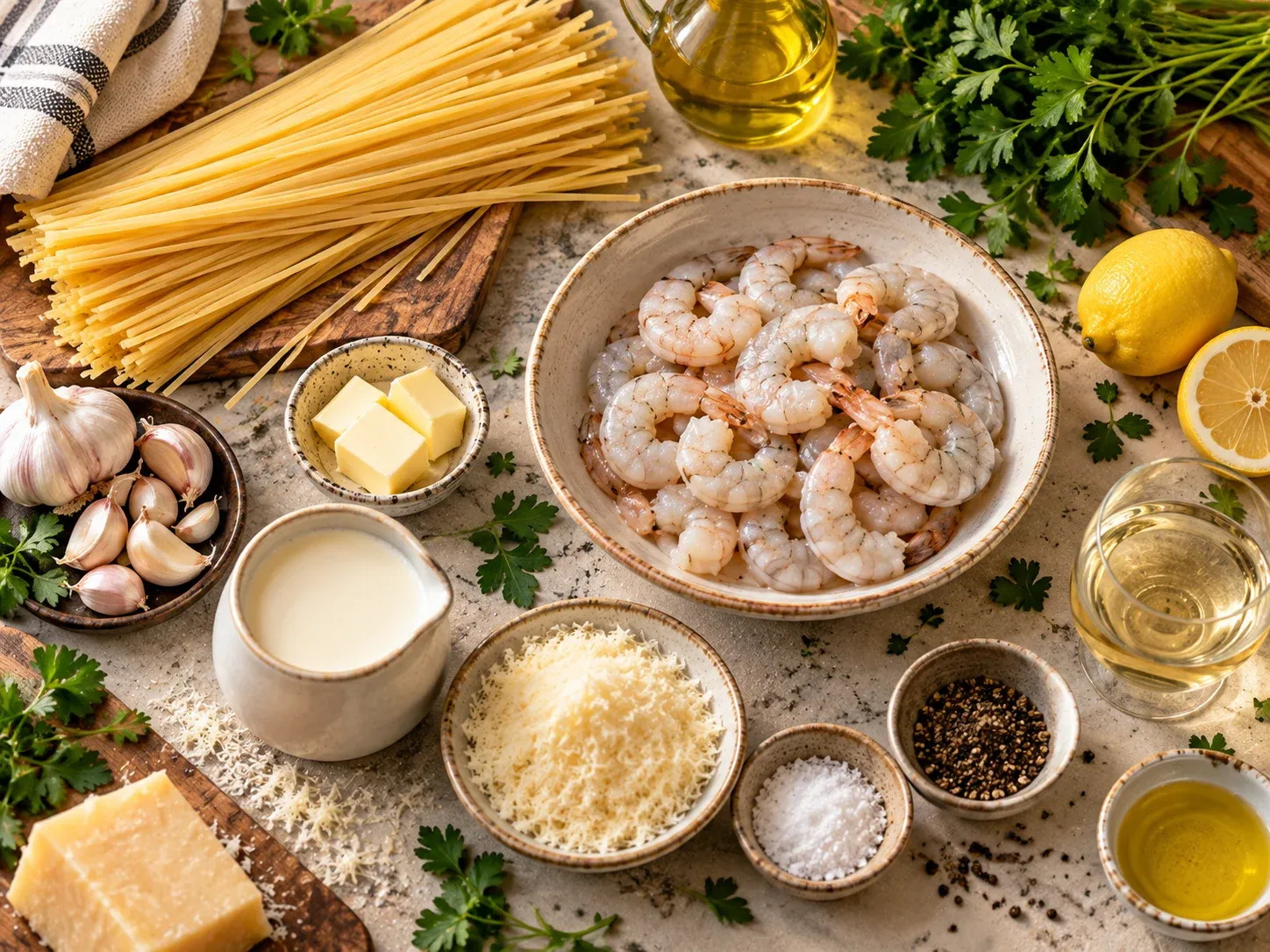
A quick note on proportions before you start: for two people, plan on roughly 200 grams of linguine, 250 grams of prawns, three to four cloves of garlic, and around 150 milliliters of cream. These aren't rigid numbers. Creamy pasta is forgiving, and you can adjust to taste as you go, especially with the garlic and cream ratio.
Prawns or King Prawns, Which to Use
Regular prawns and king prawns work equally well here, and the choice mostly comes down to presentation rather than flavor. King prawns look more impressive on the plate and hold up slightly better to the heat of the pan, which makes them a good choice if you're cooking for guests or want a more restaurant-style result. Regular-sized prawns cook a touch faster and distribute more evenly through the pasta, which makes them the easier everyday option for a quick weeknight dinner.
Whichever size you choose, buy them raw rather than pre-cooked. Pre-cooked prawns have already gone through their one safe window of heat, and cooking them a second time in a hot pan turns them tough almost instantly. Raw prawns give you full control over texture, and they only need a minute or two per side.
Do You Need Wine?
Wine adds a layer of acidity and depth that plain cream and garlic can't quite reach on their own. A splash of dry white wine, simmered down before the cream goes in, cuts through the richness and keeps the sauce from tasting flat or one-note. It also helps deglaze the pan, lifting up any browned bits left behind from searing the prawns, which adds flavor you'd otherwise lose.
That said, it's genuinely optional. If you'd rather skip it, replace it with a small squeeze of lemon juice added at the same stage, along with a splash of extra pasta water to make up the liquid. You'll lose some of the depth wine brings, but you'll gain a brighter, cleaner flavor that some people actually prefer, especially if you find wine-based sauces a bit heavy. There's no wrong answer here. It comes down to personal taste, not technique, and the recipe works well either way.
How to Make Creamy Prawn Linguine
The Sauce
The sauce here follows the same core method as a classic creamy garlic prawn pasta: garlic cooked gently in butter, a wine reduction if you're using it, then cream and parmesan brought together into a smooth emulsion using starchy pasta water. If you want the full breakdown of why this technique works, including how to stop a cream sauce from splitting or going watery, it's worth reading through in more detail in our guide to making creamy garlic prawn pasta, since the science behind it applies here just as much.
The short version: never let the sauce hit a hard boil once cream is in the pan, always save some pasta water before draining, and add cheese gradually rather than all at once.
Step-by-Step Instructions
- Bring a large pot of salted water to a boil and cook the linguine until just under al dente. Reserve a cup of the pasta water before draining.
- Pat the prawns completely dry and season lightly with salt and pepper.
- Heat butter and a splash of olive oil in a large pan over medium-high heat. Sear the prawns for about a minute per side, until just opaque, then remove them from the pan.
- Lower the heat slightly and add a little more butter to the same pan. Sauté the garlic for about twenty to thirty seconds, just until fragrant.
- If using wine, pour it in now and let it simmer for a minute or two, scraping up any browned bits from the bottom of the pan. If skipping the wine, add a squeeze of lemon juice instead.
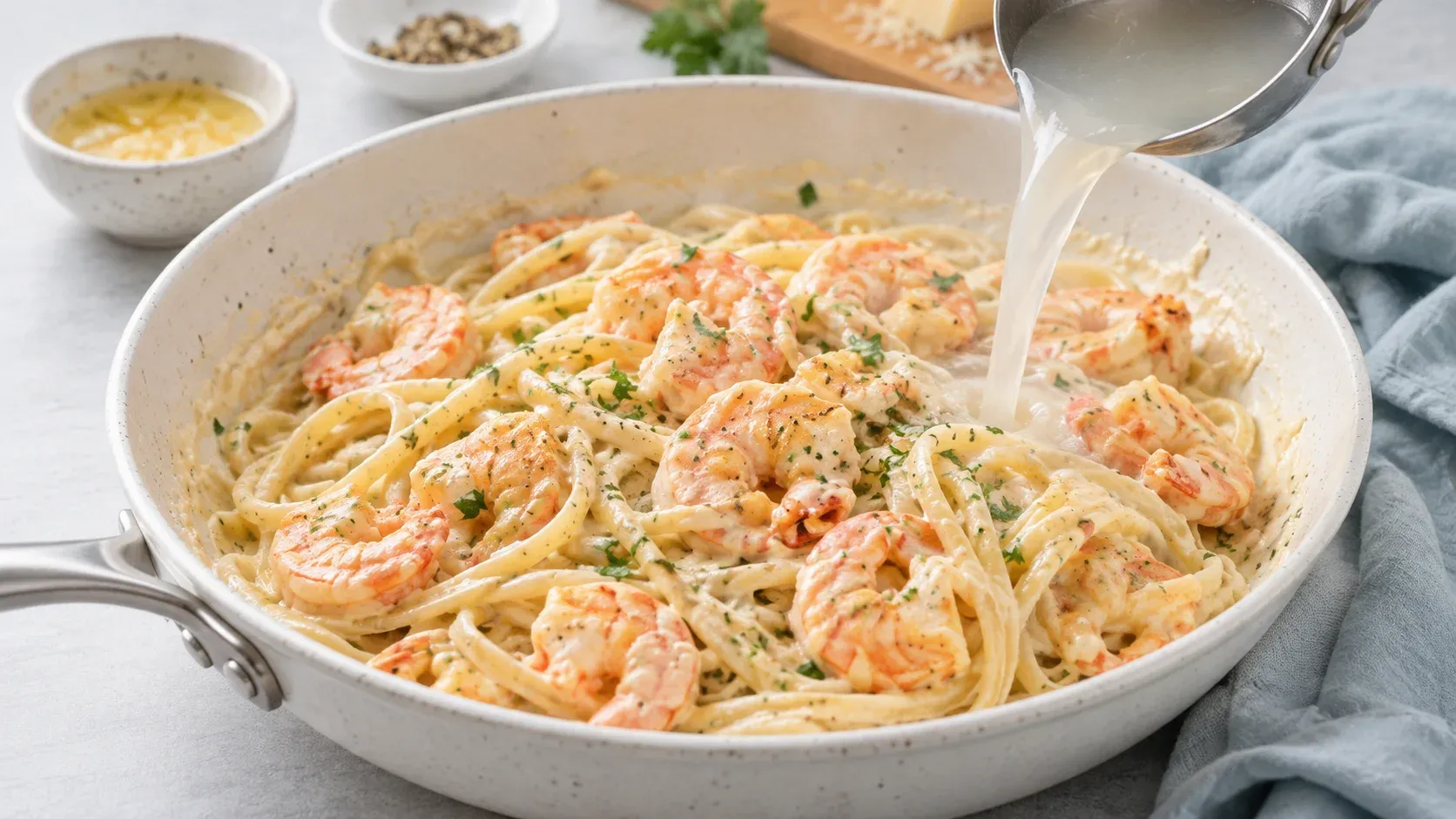
- Pour in the cream and bring it to a gentle simmer. Stir in the parmesan gradually, letting each addition melt before adding more.
- Add the drained linguine to the pan along with a splash of the reserved pasta water. Toss everything together for a minute or two, until the sauce thickens slightly and clings to the pasta.
- Return the prawns to the pan and toss briefly just to warm them through. Finish with parsley, a little extra parmesan, and a squeeze of lemon if you like.
Getting the Timing Right
The trickiest part of this dish isn't the sauce itself. It's getting the pasta and the prawns to finish at the same moment. Start your pasta water first, since it takes the longest to come to a boil. While that's heating up, prep your prawns and mince your garlic so everything is ready to go. Sear the prawns while the pasta cooks, not before, so both are ready to combine within a minute or two of each other. If your prawns finish first, pull them off the heat completely rather than leaving them sitting in a hot pan, or they'll keep cooking from residual heat and turn tough by the time the pasta catches up.
What to Serve With Prawn Linguine
This dish is rich enough to stand on its own, but a few simple sides round it out well without overshadowing it. A crisp green salad with a sharp vinaigrette helps balance the creaminess of the sauce, cutting through it with some acidity. Garlic bread or a crusty baguette is almost expected at this point, if only to mop up whatever sauce is left in the bowl once the pasta's gone. If you want something warm on the side, roasted asparagus or steamed green beans add color and a bit of crunch without competing with the pasta for attention.
What to Drink With It
If you've used white wine in the sauce, pouring the same bottle alongside dinner is an easy, reliable pairing, since the flavors are already working together in the dish. A dry Sauvignon Blanc or a light Pinot Grigio both work well here, since their acidity mirrors what's already happening in the sauce. If you skipped the wine in the sauce entirely, a sparkling water with lemon keeps things light and refreshing without pulling focus away from the food.
Make It Your Own
Once you're comfortable with the base recipe, there's a lot of room to adjust it to what you have on hand or whatever you're in the mood for that night.
- Add cherry tomatoes for a touch of sweetness and color, stirred in during the last minute of cooking so they soften without fully breaking down into the sauce.
- Add rocket or spinach at the very end, off the heat, letting the residual warmth wilt it gently rather than cooking it directly in the pan.
- Swap in mushrooms, sautéed alongside the garlic, for extra depth and an earthier flavor.
- Use sundried tomatoes for a more intense, slightly tangy variation that pairs particularly well if you've skipped the wine.
- Try coconut milk instead of cream for a lighter, dairy-free version with a subtle natural sweetness.
- Use crème fraîche instead of cream if you want a tangier, slightly less rich finish overall.
None of these changes require adjusting the core method. Add them at whichever point in the recipe makes sense for their texture, and the rest of the dish comes together exactly the same way.
Is Creamy Prawn Linguine Healthy?
Prawns are lean and high in protein on their own, so the overall healthiness of this dish comes down almost entirely to how it's made. A standard version with cream, butter, and parmesan sits on the richer end, similar to most creamy pasta dishes, and is better treated as an occasional meal than a nightly staple if that's something you keep an eye on.
If you're watching calories, a few easy swaps make a real difference without changing the dish beyond recognition. Using half-and-half instead of heavy cream cuts the richness noticeably while still keeping things creamy. Reducing the butter slightly and leaning more on garlic and lemon for flavor also helps lighten the final result without leaving it tasting bare. For a genuinely lower-calorie version, the coconut milk variation mentioned above is worth trying, since it swaps out the heaviest ingredient entirely while still keeping the dish creamy in texture.
Recipe FAQs
What kind of prawns should I use?
Either regular or king prawns work well here. Choose based on presentation and how substantial a bite you want, since king prawns hold their shape and size more visibly on the plate.
Can I use frozen prawns?
Yes. Thaw them completely and pat them dry before cooking so they sear properly instead of steaming and releasing water into the pan.
How do I know when the prawns are cooked?
They'll turn opaque and curl into a loose C shape. A tight, curled-up O shape is a sign they've gone slightly too far and will taste rubbery.
What kind of pasta should I use besides linguine?
Fettuccine or tagliatelle both work as substitutes, since they're similarly flat and hold the sauce in much the same way as linguine does.
Can I make this for one or two people?
Yes, the recipe scales down easily. Halve the ingredients and reduce the cooking time for the sauce slightly, since a smaller volume thickens faster than a larger batch.
Can I reheat creamy prawn linguine?
It's best eaten fresh, but if you have leftovers, reheat gently on the stove with a splash of water or cream to loosen the sauce back up. For more detail on why seafood pasta doesn't love the microwave, the reheating notes in our creamy garlic prawn pasta guide cover this in more depth.
Can I freeze creamy prawn linguine?
It's not ideal. Cream sauces tend to separate once frozen and thawed, and prawns can turn rubbery after being frozen a second time. If you want to freeze part of the dish, freeze just the sauce on its own before adding the prawns and pasta, then cook the prawns and pasta fresh when you're ready to eat.
Final Thoughts
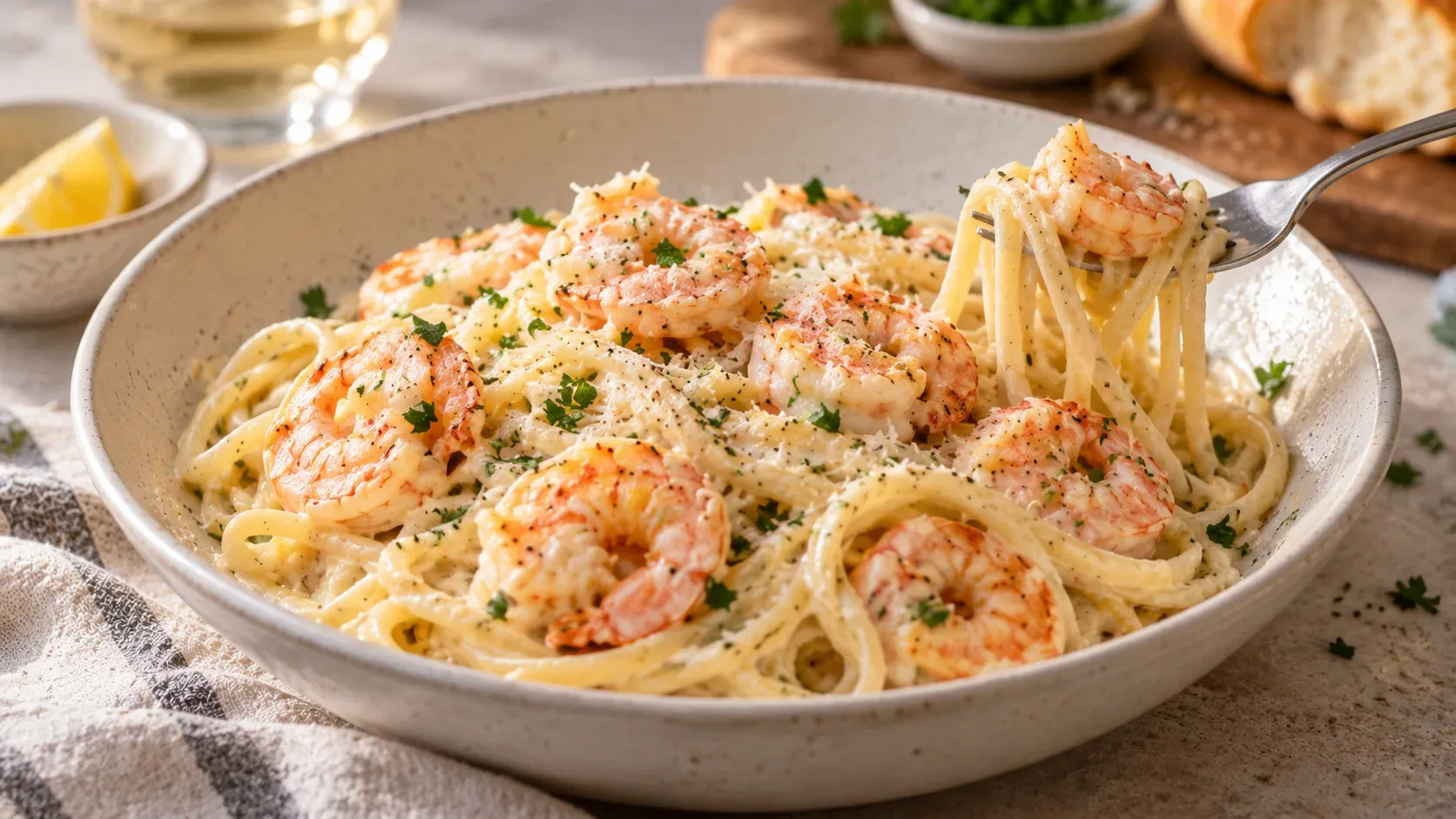
Creamy prawn linguine gives you room to make it exactly the way you want it, whether that means a splash of wine or a squeeze of lemon instead, a handful of spinach stirred in at the end, or a lighter coconut milk base swapped in for the cream. The method stays the same no matter which direction you take it, so once you've made it once, every variation after that comes together just as easily as the first.
Recipe
Easy Creamy Prawn Linguine Recipe (20-Minute Dinner)
By Rabi
Creamy prawn linguine made two ways, with wine or without, ready in under 20 minutes.
- Prep
- 10 min
- Cook
- 15 min
- Rest / additional
- 0 min
- Total
- 25 min
- Servings
- 2
- Cuisine
- Italian
Ingredients
Instructions
- Bring a large pot of salted water to a boil and cook the linguine until just under al dente. Reserve a cup of pasta water before draining. Pat the prawns completely dry and season lightly with salt and pepper. Heat butter and olive oil in a large pan over medium-high heat. Sear the prawns for about a minute per side, then remove from the pan. Lower the heat and add a little more butter. Sauté the garlic for twenty to thirty seconds until fragrant. If using wine, pour it in and simmer for a minute or two. If skipping, add a squeeze of lemon juice instead. Pour in the cream and bring to a gentle simmer. Stir in the parmesan gradually. Add the drained linguine with a splash of reserved pasta water. Toss for a minute or two until the sauce thickens and clings. Return the prawns to the pan, toss briefly to warm through, and finish with parsley and lemon.
Notes
Wine is optional; lemon juice works as a substitute. Best eaten fresh rather than reheated.
Nutrition per serving
- calories
- 640 kcal
- protein
- 35 g
- carbohydrates
- 60 g
- fat
- 29 g
Related Articles
More posts you might enjoy